












29. Introduction to Sustainability in Restaurants: A Commitment to the Future

In a world that is increasingly aware of the environmental impact of our actions, sustainability has become a crucial issue across all sectors, including the restaurant industry. Restaurants are not only places where food is served, but they are also an integral part of the community and therefore have a responsibility to operate in a way that benefits the environment and society at large. In this article, we will explore what sustainability means in the context of a restaurant, its benefits, and how you can begin implementing sustainable practices in your business.
-What is Sustainability?
Sustainability refers to the ability to meet the needs of the present without compromising the ability of future generations to meet their own needs. In the restaurant industry, this involves adopting practices that reduce environmental impact, promote social well-being, and foster economic viability.
-The Importance of Sustainability in Restaurants
1. Reducing Environmental Impact: The food industry is responsible for a large portion of greenhouse gas emissions, water use, and waste generation. Implementing sustainable practices helps mitigate this impact.
2. Attracting Conscious Customers: More and more consumers are looking for options that are environmentally friendly. Restaurants that adopt sustainable practices can appeal to this market segment, improving their image and increasing customer loyalty.
3. Economic Efficiency: Sustainability is not only good for the planet, but it can also be profitable. Reducing food waste and optimizing resource use can lead to significant savings in operating costs.
4. Regulatory Compliance: Many regions are implementing stricter regulations related to sustainability. Adopting sustainable practices can help restaurants comply with these regulations and avoid penalties.
5. Community Contribution: Sustainable restaurants often get involved in their communities, supporting local farmers and promoting the regional economy.
-How to Implement Sustainable Practices in Your Restaurant
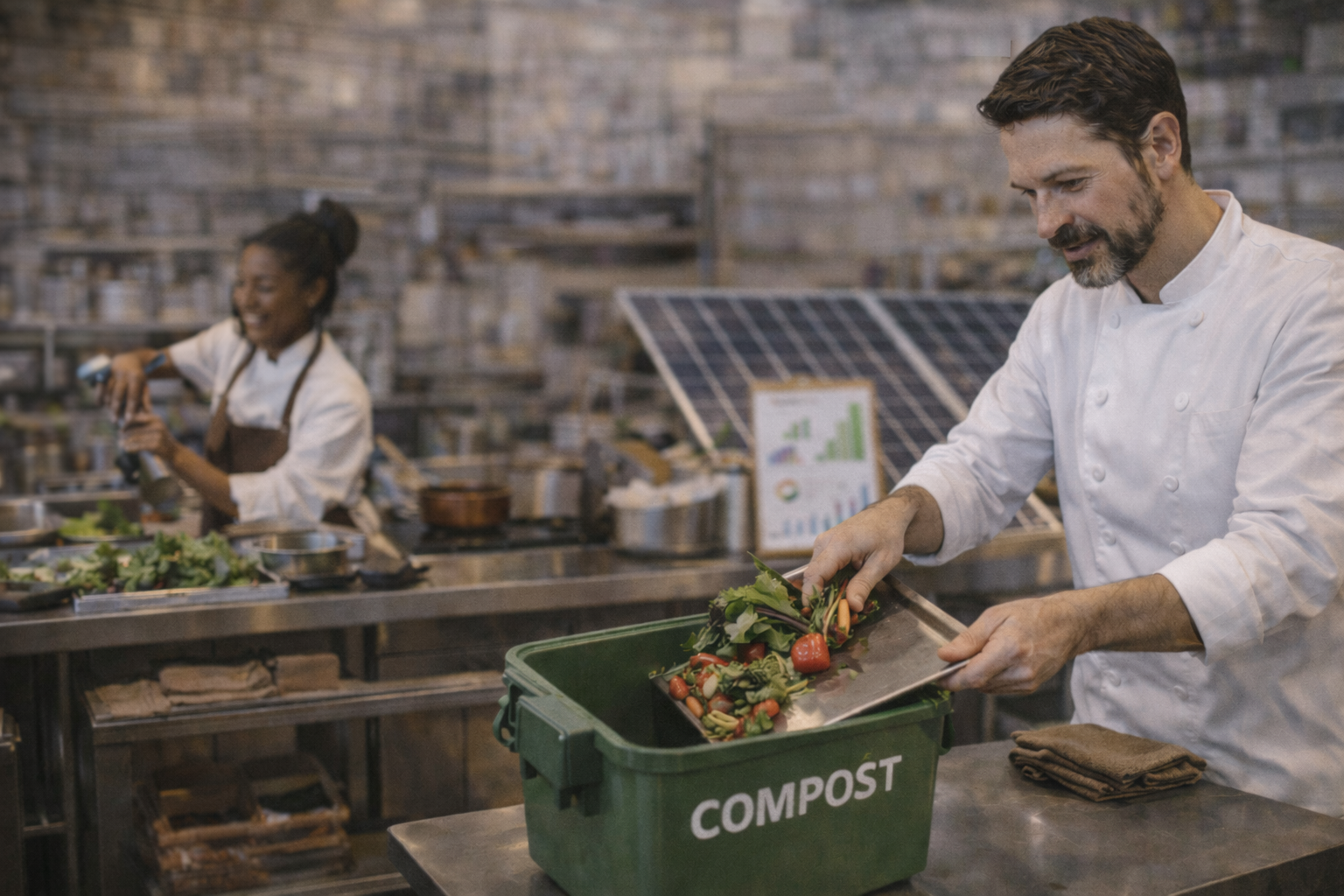
1. Reduce Food Waste: Implement practices that minimize waste, such as proper menu planning, recycling leftovers, and donating unused food.
2. Use Local and Seasonal Ingredients: By working with local suppliers and using seasonal ingredients, you not only reduce the carbon footprint associated with transportation, but you also support producers in the region.
3. Opt for Eco-Friendly Packaging: If you offer takeout options, use biodegradable or reusable packaging, gradually eliminating single-use plastic.
4. Implement Energy Efficiency Practices: Invest in equipment and technologies that reduce energy consumption, such as LED lighting, efficient appliances, and optimized heating and cooling systems.
5. Staff Education and Training: Train your team on the importance of sustainability and how they can contribute to it in their daily work.
6. Communicate Your Efforts: Let your customers know about the sustainable initiatives you are implementing. This will not only raise awareness but also foster a stronger connection with them.
- Conclusion
Sustainability in restaurants is not just a trend but an urgent need in the current context. By adopting sustainable practices, you not only contribute to the conservation of the environment but also improve the profitability of your business and attract a more conscious customer base. At MF Imports, we believe that every little change counts and we are committed to supporting restaurants on their journey towards sustainability.

Catalog
Equipa tu restaurante
Muebles artesanales mexicanos para crear espacios únicos e inolvidables.
Ver productos